Things to Do in The Fjords
Train, ferry and mountain road through the most dramatic scenery in Norway.
See top-rated activities »Seeing the Norway Fjords by Land
The Norway fjords were carved by glaciers and then flooded by the sea, which is why they are so deep and their walls so steep. Two of them, the Naeroyfjord and the Geirangerfjord, are on the UNESCO World Heritage list as the West Norwegian Fjords. You do not need a cruise ship to see them: trains, local ferries, buses and rental cars reach all the main viewpoints, and staying a night in a fjord village lets you see them after the day-trippers leave.
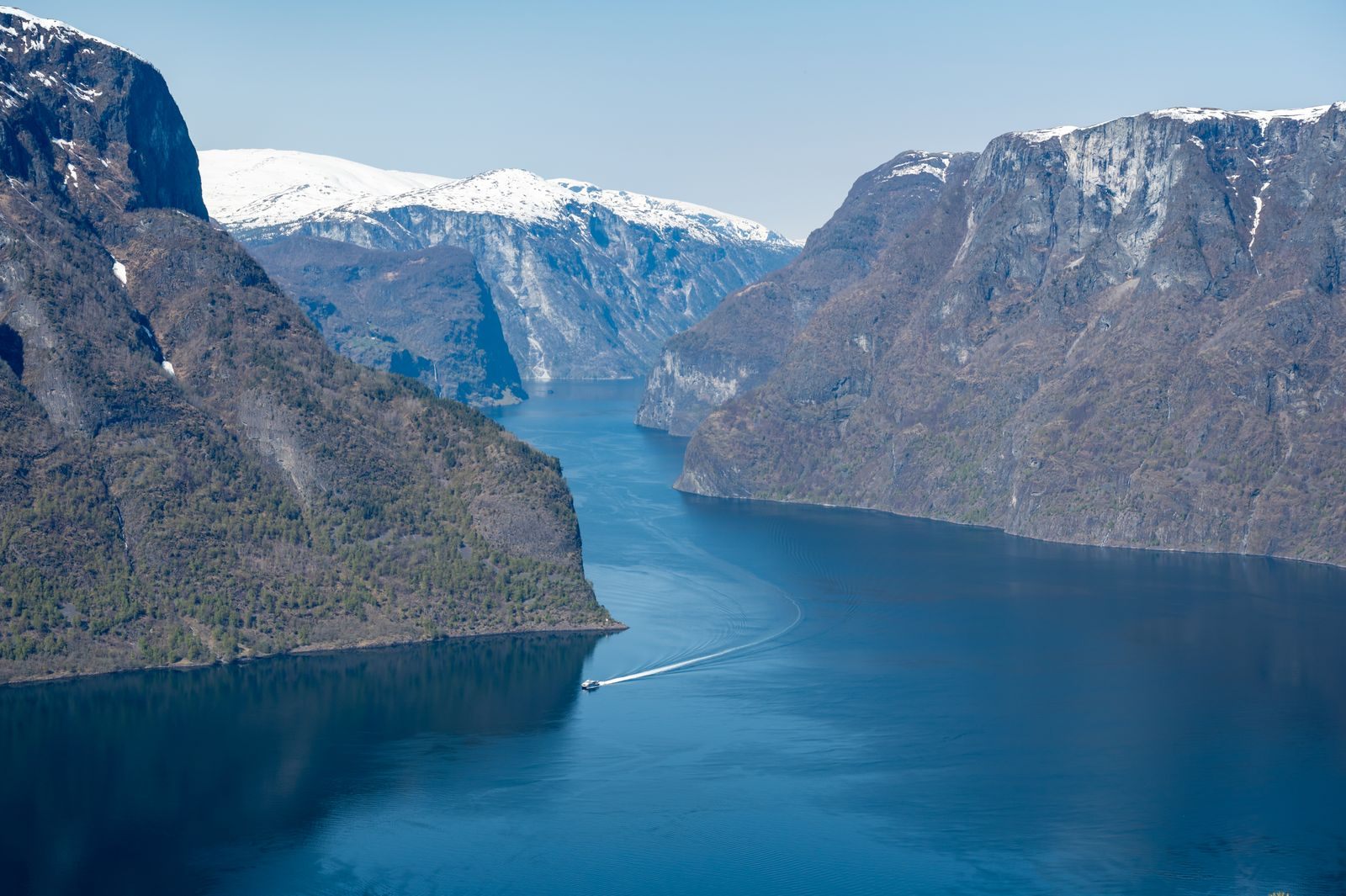
The Sognefjord, Norway's longest and deepest, runs inland from the coast north of Bergen. Its narrowest arm, the Naeroyfjord, is barely a few hundred meters wide in places, with farms clinging to ledges high above the water; electric sightseeing boats run between Gudvangen and Flam. At Flam, the Flam Railway climbs to Myrdal on the Bergen line through tunnels and hairpin curves, stopping beside the roaring Kjosfossen waterfall. Above the nearby town of Aurland, the Stegastein platform juts out 650 meters above the Aurlandsfjord. Combining these by train, boat and bus is the well-known Norway in a Nutshell route from Bergen or Oslo.
The Sognefjord region also has some of the oldest wooden buildings in Europe. Urnes Stave Church, from the 1100s, is a World Heritage site of its own, and the tarred, dragon-topped Borgund Stave Church is close to the main road between Oslo and Bergen. Glaciers come down to the valleys at Jostedalsbreen National Park, where guided glacier walks run in summer.
Farther north, the S-shaped Geirangerfjord is lined with waterfalls such as the Seven Sisters, and roads climb from the village to the Dalsnibba and Eagle Road viewpoints. The Trollstigen road, a set of hairpin bends up a mountain wall, connects Geiranger with Andalsnes in summer; it is closed in winter. Alesund, on the coast, was rebuilt in Art Nouveau style after a fire in 1904, and the 418 steps up Mount Aksla give a postcard view of its towers and islands. For the same fjords seen from a ship, see our Norwegian fjords cruise guide.
Don’t Miss
One of the steepest standard-gauge railways in the world, from the fjord at Flam to the mountain station at Myrdal.
A narrow arm of the Sognefjord, best seen from the sightseeing boats between Gudvangen and Flam.
A wood and steel platform 650 meters above the Aurlandsfjord, on a mountain road above Aurland.
Norway's oldest stave church, with famous animal carvings from the 1100s.
A winding fjord with the Seven Sisters waterfalls, mountain farms and high road viewpoints.
An Art Nouveau town rebuilt after 1904, with 418 steps to a viewpoint over the islands.
Top-Rated Tours, Tickets & Activities in the fjords
 Viator
 Viator
 Viator
 Viator
 Viator
 Viator
 Viator
 Viator
 Viator
 Viator
 Viator
 Viator
 Viator
 Viator
Tours, tickets, prices and reviews from Viator (a Tripadvisor company) and Tiqets — prices are per person, from, and were checked October 28, 2026. Best in Norway may earn a commission when you book, at no extra cost to you.
Plan your time in the fjords
Tell us when you are coming and what you enjoy. A travel specialist will put together hotel, activity and travel options for you — free, with no obligation.
Get free trip quotes »the fjords — FAQ
What is the best way to see the Norway fjords without a cruise?
From Bergen or Oslo, take the train and boat route through Voss, Gudvangen, the Naeroyfjord, Flam and the Flam Railway. For Geiranger, base yourself in Alesund or Geiranger and use buses, boats or a rental car.
Which is better, the Naeroyfjord or the Geirangerfjord?
Both are World Heritage fjords. The Naeroyfjord is narrower and easier to combine with Bergen and the Flam Railway; the Geirangerfjord has bigger waterfalls and mountain road viewpoints and pairs well with Alesund.
Is Trollstigen open all year?
No. The road usually opens in late spring and closes in autumn, depending on snow. Check the Norwegian road authority before you travel.
More of Norway